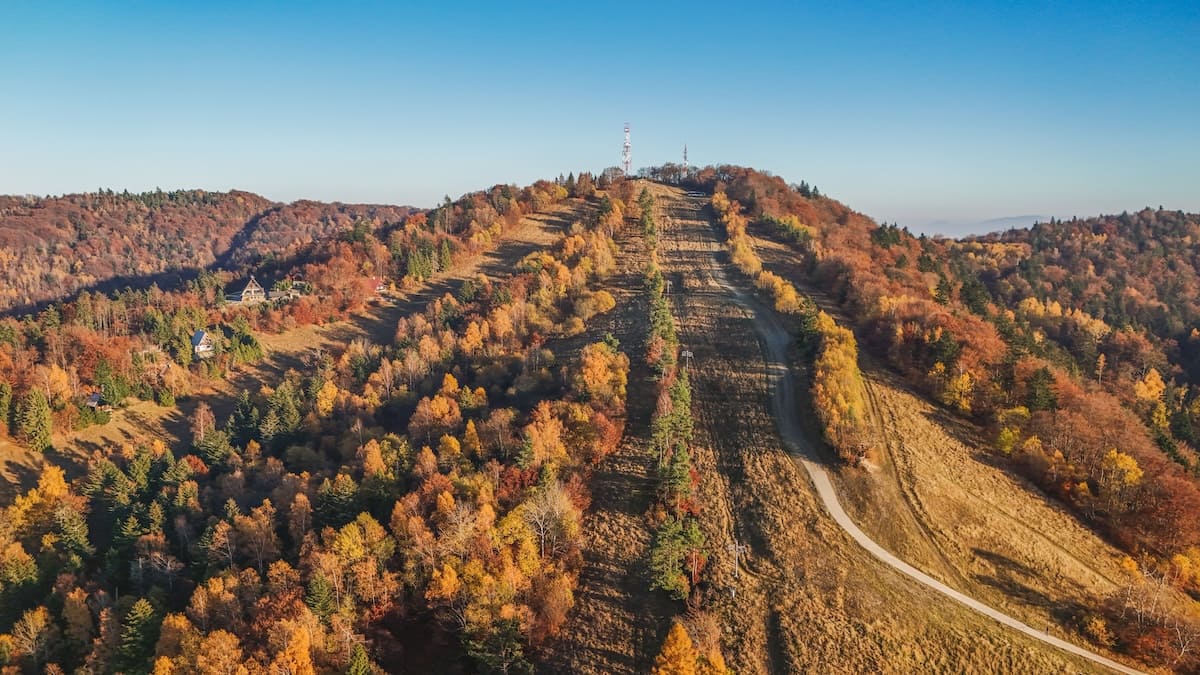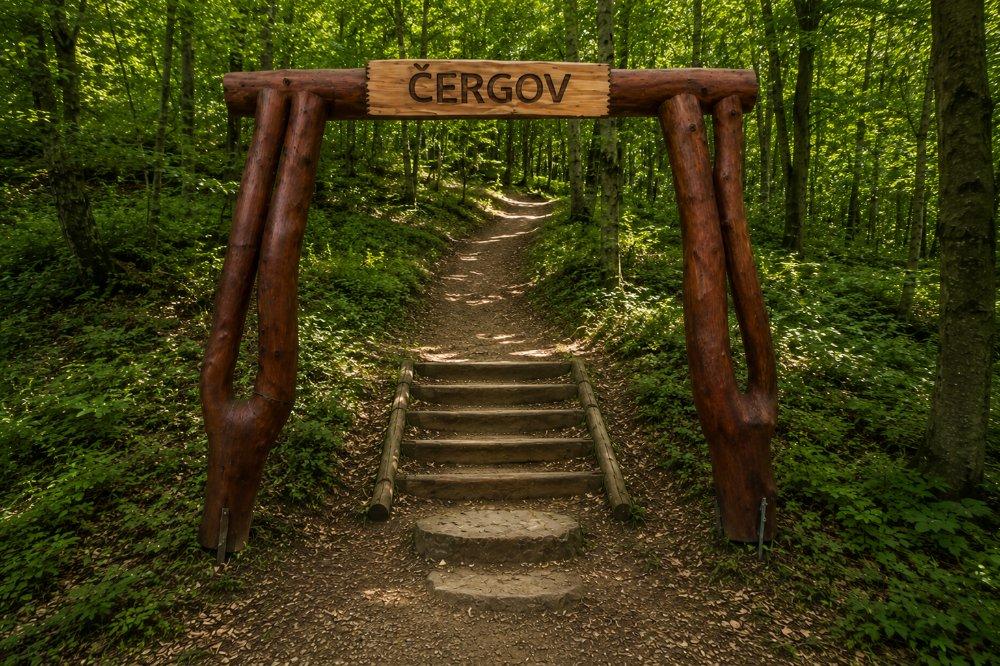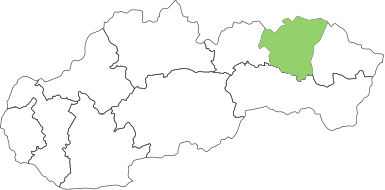


The first mention of the village Pečovská Nová Ves dates from 1319 (Wyfalu). This historically significant village was already the seat of the nobility in the Middle Ages, but it was not until the early modern period that it became the centre of the estate, which necessitated the construction of a manor house. Until 1322, it was royal property; thereafter, it and the surrounding area were owned by the nobleman Mičko, who built his residence high up in the mountains Chergov.
Through marriage, one becomes Pečovská Nová Ves were acquired by other families who lived in the castles and manor houses in the village, be it the Péchy, Mariássy or Bornemisza families. And thanks to them, it is Pečovská Nová Ves extremely rich in monuments and historic buildings. In addition to the Baroque church, the Classicist synagogue and the chapel, more than 10 manor houses and country estates, with only the villages of Liptovský Ján or Brezovica in Slovakia able to rival it. Such a concentration of historic monuments is unique by rural standards.
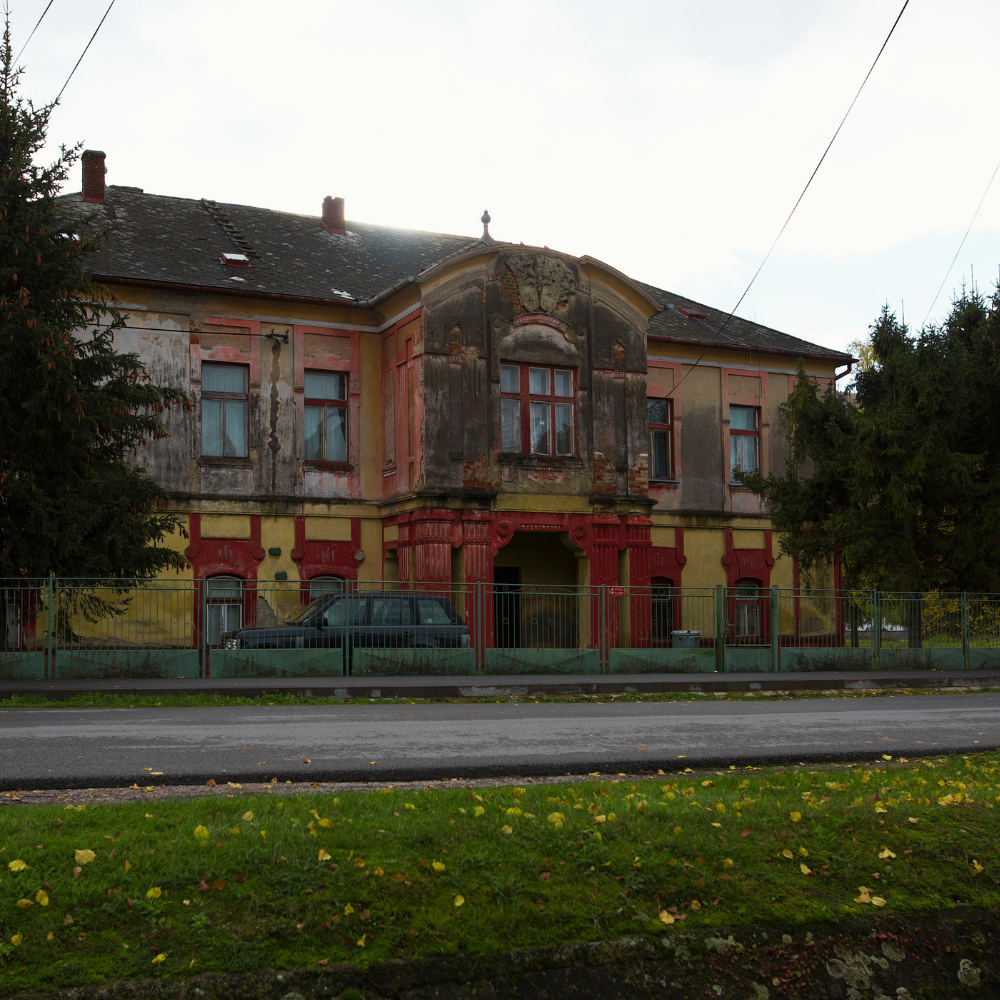
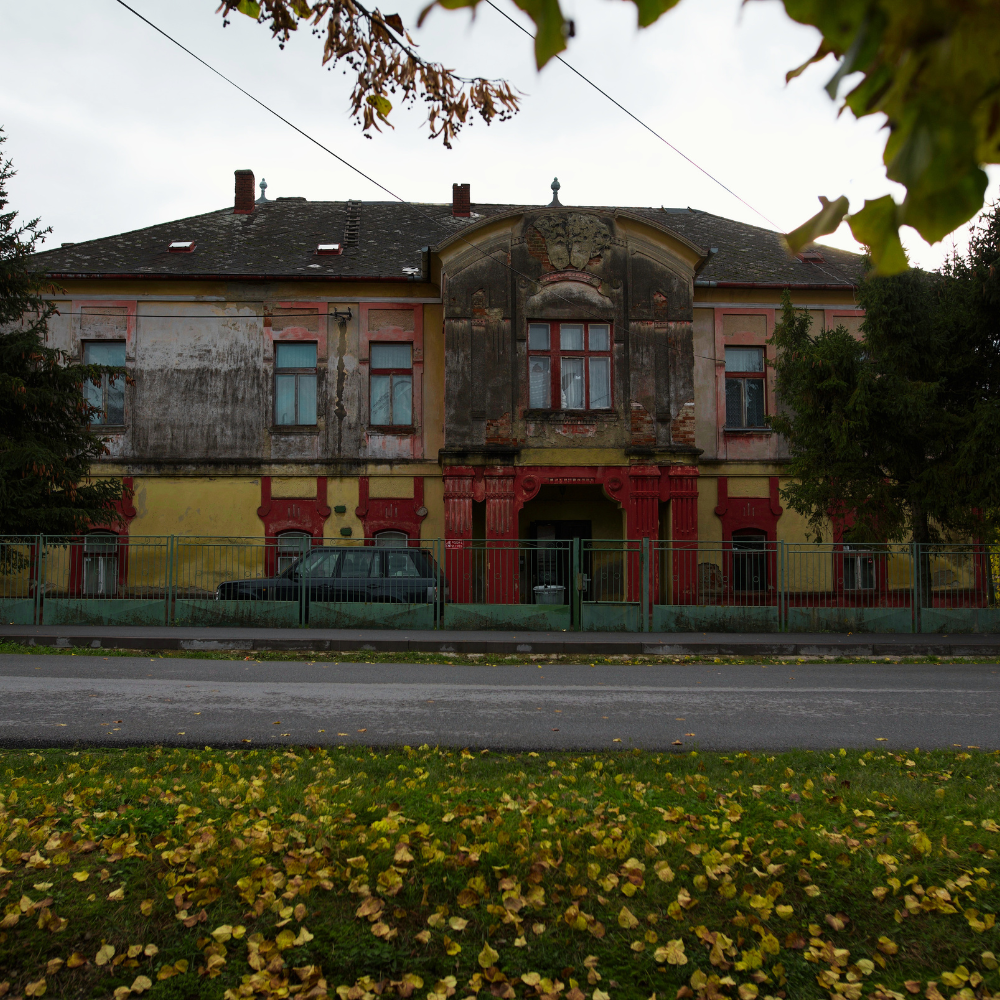
"Bornemisza" Manor House" It represents a more modern interpretation of a manor house in the form of a villa, created by the conversion of an older aristocratic residence. There is also specific information to the effect that this older building belonging to the Péchy family (roughly dated to the 18th century based on details of the ground floor) was extended by one storey and comprehensively refurbished by Žigmund Peči at the end of the 19th century. It was built on the older foundations, incorporating the vaulted sections of the ground floor, and for the sake of comfort, he had the façades decorated with relatively rich stucco work. This resulted in 14 rooms, a spacious staircase and a terrace. The building was surrounded by a large park.
The manor house was named after a later owner The Bornemiszes, as it passed from the Peči family’s estates (via Mária Pečiová and her husband István Bornemisza) into this family. However, this was only for a short time, as after the Second World War the building was confiscated and used for various storage and residential purposes. Thanks to minimal further alterations, it has been preserved to this day in the form in which it was rebuilt at the end of the 19th century.
The appearance of the manor house
The building, with a rectangular floor plan, has ground-floor rooms vaulted with Prussian barrel vaults on transverse ribs, topped with stucco decoration. The space is lit by windows with segmental arches and sloping jambs. The vaults and their decoration, as well as the design of the openings, are typical of the period Baroque (18th century). A wide staircase in the centre of the building, which was built following the addition of an upper storey to the manor house, leads to the upper floor. The upper storey was constructed from solid fired brick; the rooms were covered with flat wooden but plastered ceilings and a new hipped roof. The exterior design was harmonised – the older ground floor was given (like the upper floor) decorative elements in the form of pilaster strips, cornices, window surrounds and pediments around the windows and entrances. A northern projection with a gable was built, on which the family’s stucco coat of arms was installed. A brick terrace was created on the southern side. A number of artisanal details (windows, doors, paving, balustrades) have also survived to the present day. The manor complex was set within a well-maintained park featuring beautiful trees.
The last owner of the manor house was Štefan Bornemisz – István Bornemisza, son of Mária Péchy, daughter of Zsigmond Péchy, Chief County Governor of Abov-Turna, who was born on 24 November1917 in Budapest, died on 15 November 2006 in Pečovská Nová Ves, and was the son of István Bornemisza, a royal chamberlain. Following the collapse of the monarchy, his family lived in Pečovská Nová Ves, where she owned three manor houses and managed her extensive estate.
The "Bornemisza" manor house is part of Šariš Castle Road.
Source: Pečovská Nová Ves Local Authority – A Journey Through History
Photo source:OOCR RŠ
Map
Gallery
Information