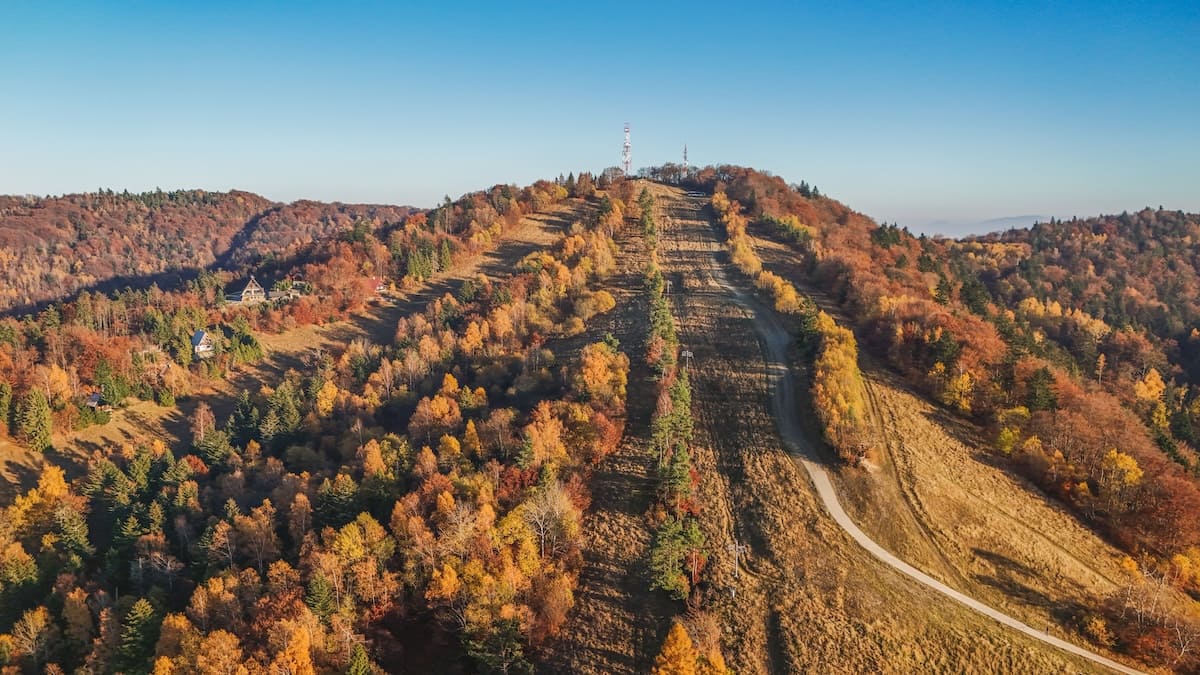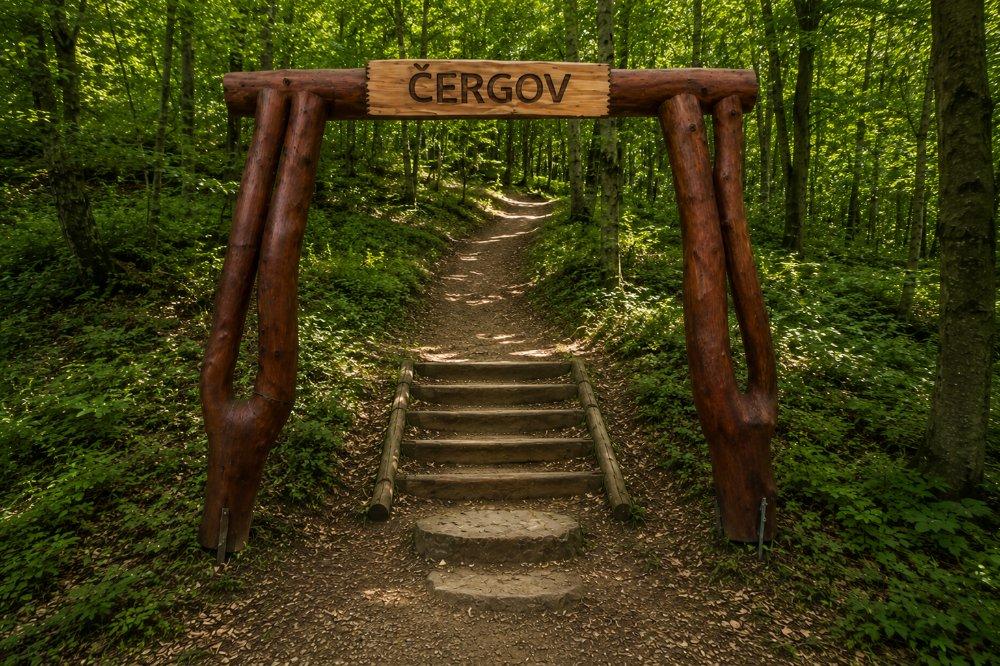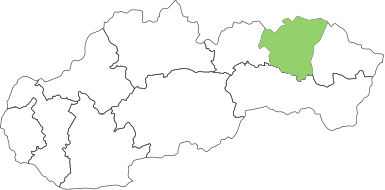


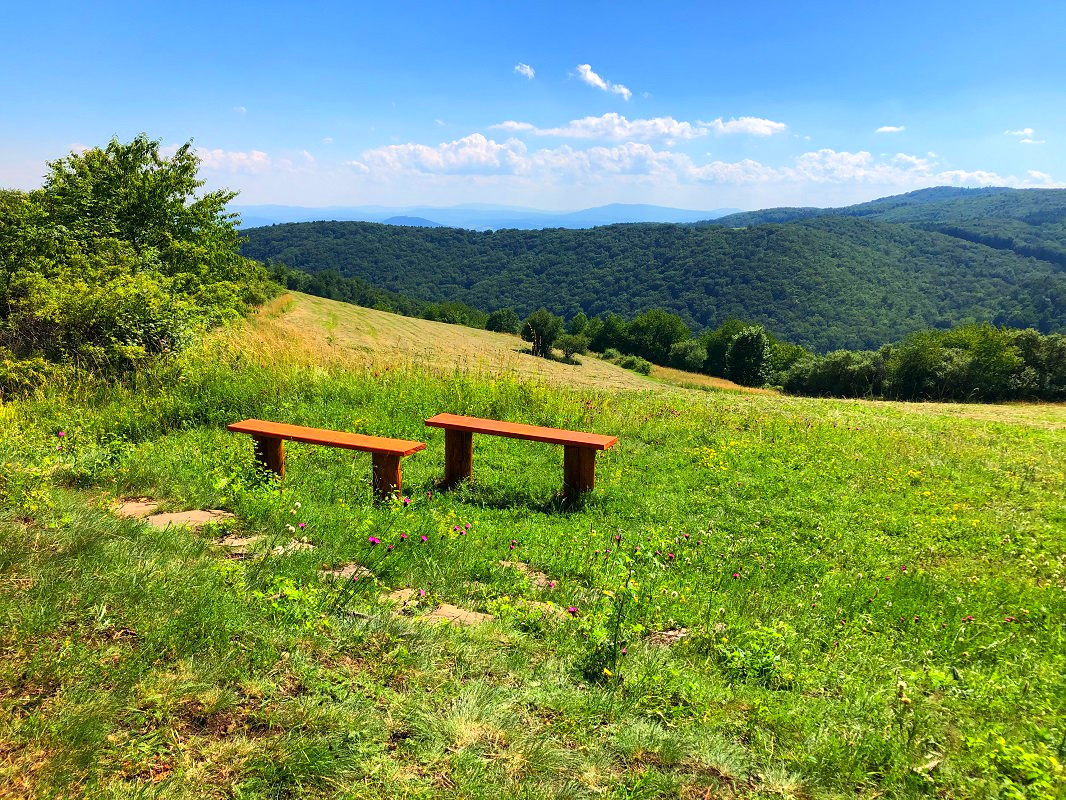
Castle Hill is often mentioned in connection with the village Sokolovce in the Šariš region. Until 1948, it was known as Tolčemeš. At the foot of the Čergov Mountains At an altitude of 871 metres above sea level, a massive Slavic fortified settlement stood here in the 9th and 10th centuries.
The hillfort in the Čergov Hills
A hillfort near Šarišské Sokolovce was discovered J. Macák. It was built on the highest point of the steep, mountainous Lazíky ridge, which runs in a north–south direction between the Bernátské and Bodovské valleys, on a conical hilltop.
The hillfort was founded in the 9th century and has been preserved, largely protected by dense woodland. Its fortification gradually evolved until it took the form of a fortification consisting of four enormous ramparts encircling the entire Hradová Hill. The ramparts were built in stages. The first – the fortification rampart of the foothills – was formed as early as the 9th century. Further ramparts were built later in the 10th century. It was then that the rampart dividing the entire foothills into two parts was also constructed. The hillfort took the form of a small acropolis with a more pronounced summit. Hradová hora most likely housed a centre intended for the administration of a specific territorial area. It was intended to protect the local community from incursions by the warlike Hungarian-Aprád tribes into this part of the Carpathian Basin. Over more than a thousand years, the surrounding area has changed beyond recognition.
Given its location and fortifications, it ranks among classic examples of Slavic hill forts in eastern Slovakia. The largest The length of the hillfort is 253 m, maximum width 125 m. Adjacent to the north-eastern bend of the hillfort’s rampart is a small meadow that slopes gently towards the west. A dark cultural layer was discovered on the surface, roughly in the centre of the meadow, during trial excavations. A cut through the rampart revealed that it was built up from clay and stone. The stone was used primarily to reinforce it against soil slippage into the moat. A novel feature in the construction system of the rampart was the discovery of traces of charred wood, together with a narrow strip of clay burnt red. The method of constructing the rampart, the pottery shards recovered, an iron arrowhead with barbs and the fragment of another arrowhead proved that it had been built by the Slavs, presumably in a later period. The preserved remains of charred wood from the rampart’s structure, pottery shards from the Late Bronze Age, a single Slavic shard and an iron leaf-shaped spearhead suggest that it was built by the inhabitants of the acropolis before the 10th century, to prevent easy access to the acropolis from the north-western side.
Finds and remains of the hillfort
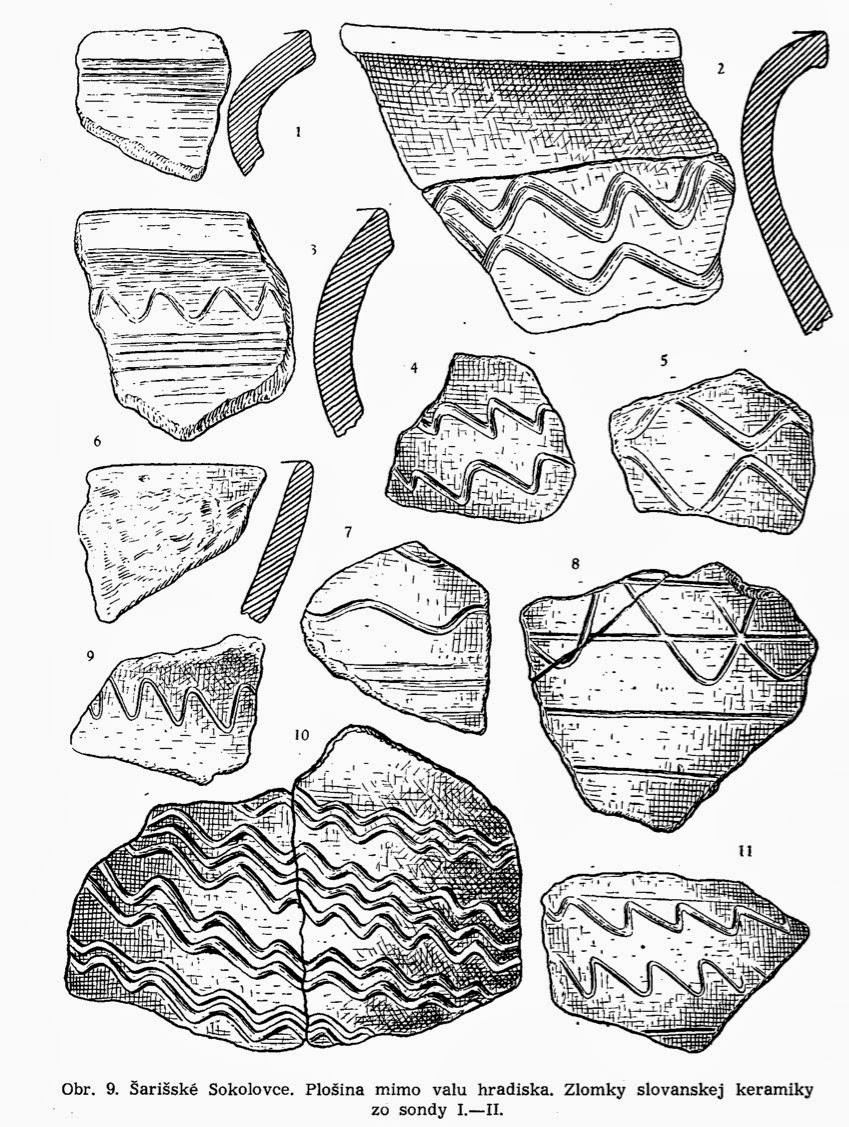
It was found at Hradisko ceramic material. The oldest artefacts ever found at the hillfort during research to date are those dating from the earlier phase of the Late Bronze Age (BD – HA – HB), which in eastern Slovakia is currently attributed to the Gáva culture, which expanded into this area from the south. The vessels were probably already being made on a faster-turning potter’s wheel, as evidenced mainly by the fine horizontal strokes or grooves in the surface of the shards.
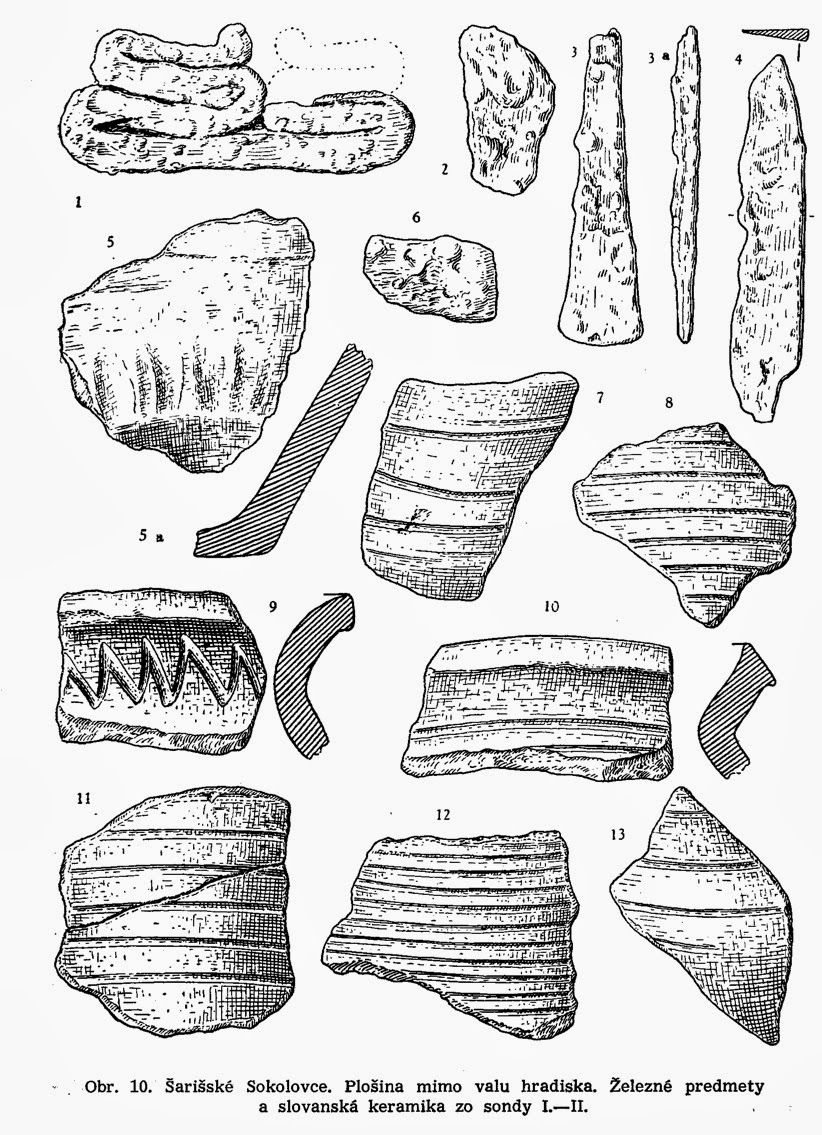
Among those found with iron objects It is undoubtedly the most remarkable and significant fragment of a complexly shaped steel flint with triple-curved arms; it is 8.6 cm long and 3.6 cm wide. This flint is of a completely different type to the iron flints previously found in graves dating from the Slavic–Avar and Old Hungarian periods in eastern Slovakia.
Found coal samples from the cultural layer, discovered on a platform outside the rampart of the hillfort, was identified by E. Krippel of the Dionýz Štúr Institute of Geology in Bratislava in two instances as originating from elm (Ulmus) and, in one instance, as being derived from beech (Fagus). This finding was particularly noteworthy given that hornbeam woodland predominated at the hillfort and in its surroundings.
As a fortified settlement of the ancient Slavs, Hradisko was predominantly in this part of the region sacred nature.
Source: valka.cz, korzar.sk
Photo source:OOCR RŠ
Map
Gallery

Information
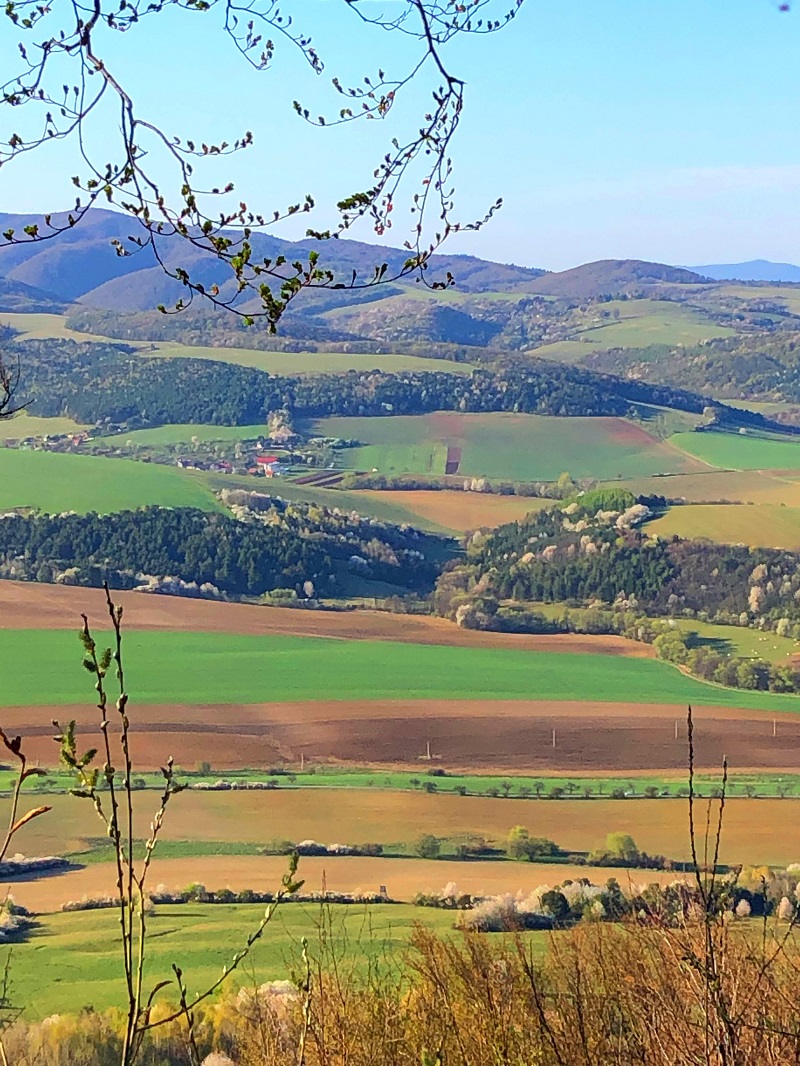
Hradisko lies 7 km north of Šarišské Sokolovce in the southern part of the Čergov Mountains.
It can be reached from Šarišské Sokolovce via the Bernátske Valley, from Bodovce along the ridge of Lazíky Hill, and from the village of Hradisko via the Ternianka Valley.
A rough, unpaved road runs from the village of Šarišské Sokolovce, via Bodovce, into the area around the Čergov Mountains; it is poorly signposted. Follow this road to reach the foot of the aforementioned hill; if you are travelling by car, park here and continue on foot along the forest track to the summit of Hradová hora. As you climb to the summit, the remains of a Slavic hillfort will come into view.